
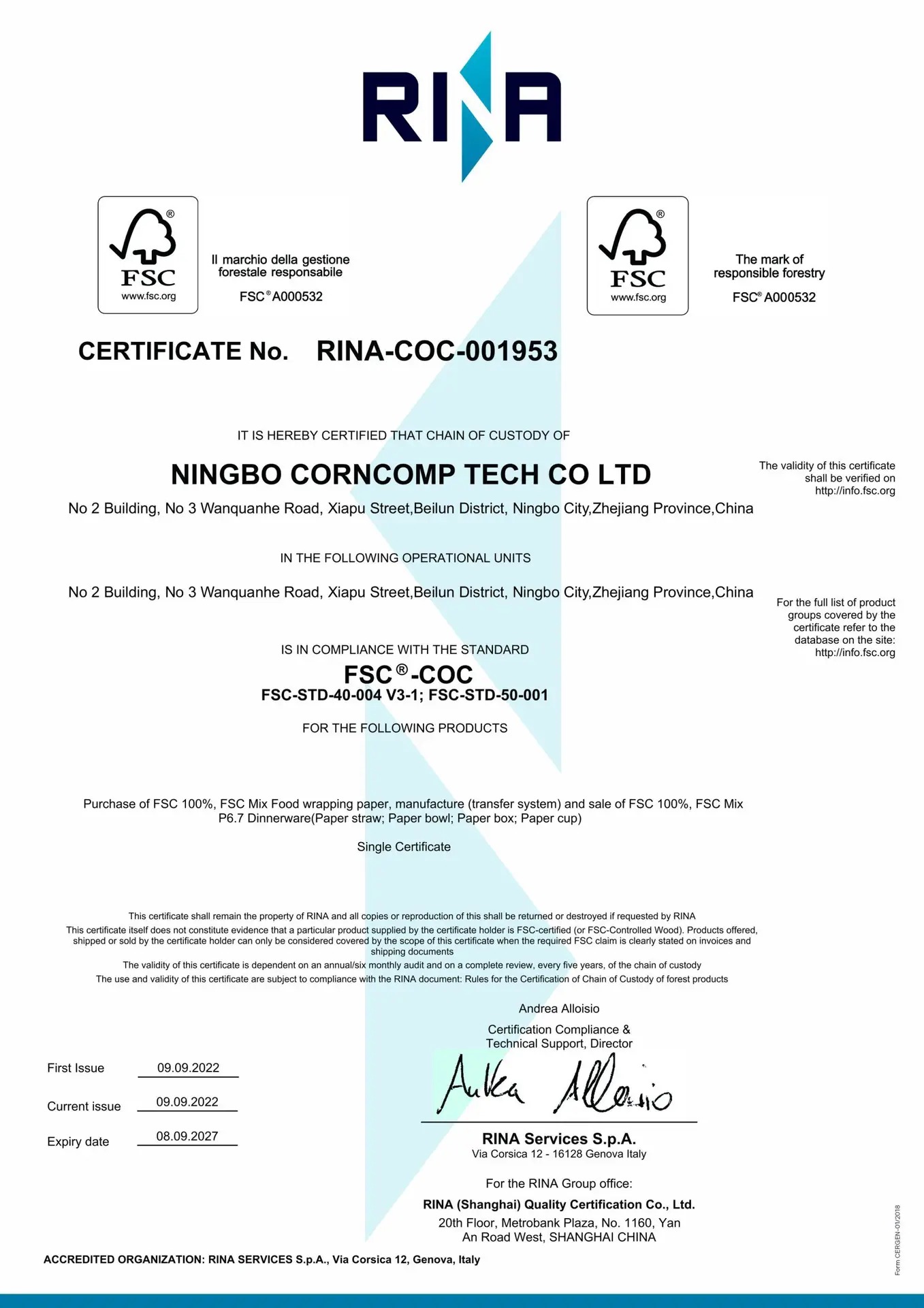
1. Check the certificate and its holder
Ask for the full certificate, including any annex or product list. Note the certificate number and the company named as the holder. A trading company, affiliated factory and raw-material supplier may be separate businesses. Confirm who will manufacture your product and how the certificate applies to it.
2. Understand what is covered
Different certificates support different claims. FSC chain-of-custody certification relates to forest-based material sourcing, not compostability. The BPI certificate in our library covers printed paper straws up to 352 g/m², not our entire range. DIN 7W0517 relates to a resin material, while DIN 7P1802 covers specified kraft food containers. Always read the product description and any restrictions.
3. Verify validity and keep the records
Check the issuer’s records where available, such as FSC Search or the BPI product catalogue. An expiry date printed on a certificate does not confirm its current status. Keep the item code, material specification, applicable certificate and relevant test reports with your order records. If the material, ink, coating or supplier changes, ask whether the documentation still applies. Also check local collection and processing options before advising customers how to dispose of the packaging.