
Nominal capacity and usable fill are different
A cup’s size label may describe a nominal volume. Your practical serving level can differ once you allow headspace, foam, ice or toppings. Ask the supplier how capacity is measured and confirm the portion using a sample.
Measure the rim, base and height
Rim diameter helps identify a lid family; base diameter and height affect the cup’s shape, storage and handling. Two cups with the same ounce label can have different physical dimensions, so do not order a lid by capacity alone.
What the CORNCOMP lid table actually tells you
Our black PLA coffee-cup lid sheet lists these references: 4 oz with a 63 mm lid; 6 oz with 75 mm; 8 oz with 80 mm; and 10/12/16/20 oz with 90 mm. These are catalogue lid references, not universal cup-size standards or confirmation that every cup construction is available in every size. Ask for the exact cup-and-lid pairing.
Choose construction after defining the drink
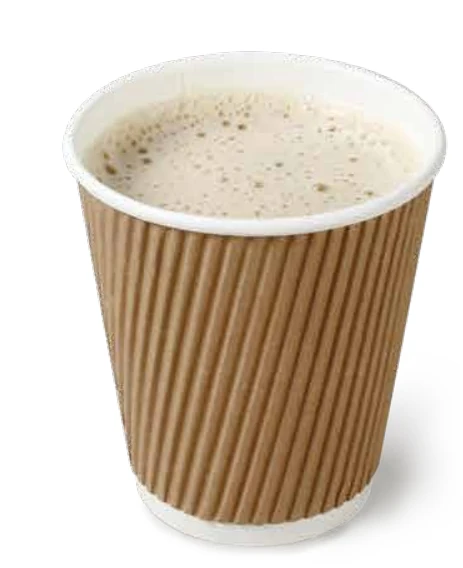
Identify the drink, serving temperature and portion first. Then compare single-wall, double-wall and ripple constructions, including whether a sleeve is needed. Assess a filled sample for handling and confirm the lining and lid materials.
A short specification checklist
Include the cup reference, nominal and usable volume, top and base diameter, height, wall construction, lining, lid reference, artwork, quantity per size and destination. This gives the supplier enough detail to answer a quote request without guessing.